The pipa is a pear-shaped, fretted lute. It migrated from Central Asia into China during the Han and Sui dynasties; its name comes from the two directions of the plectrum stroke, p'i (forward) and p'a (backward). Until the mid-tenth century it was held horizontally and its twisted silk strings were plucked with a large triangular plectrum. Toward the end of the Tang dynasty musicians began using their fingernails, and the instrument came to be held more upright.
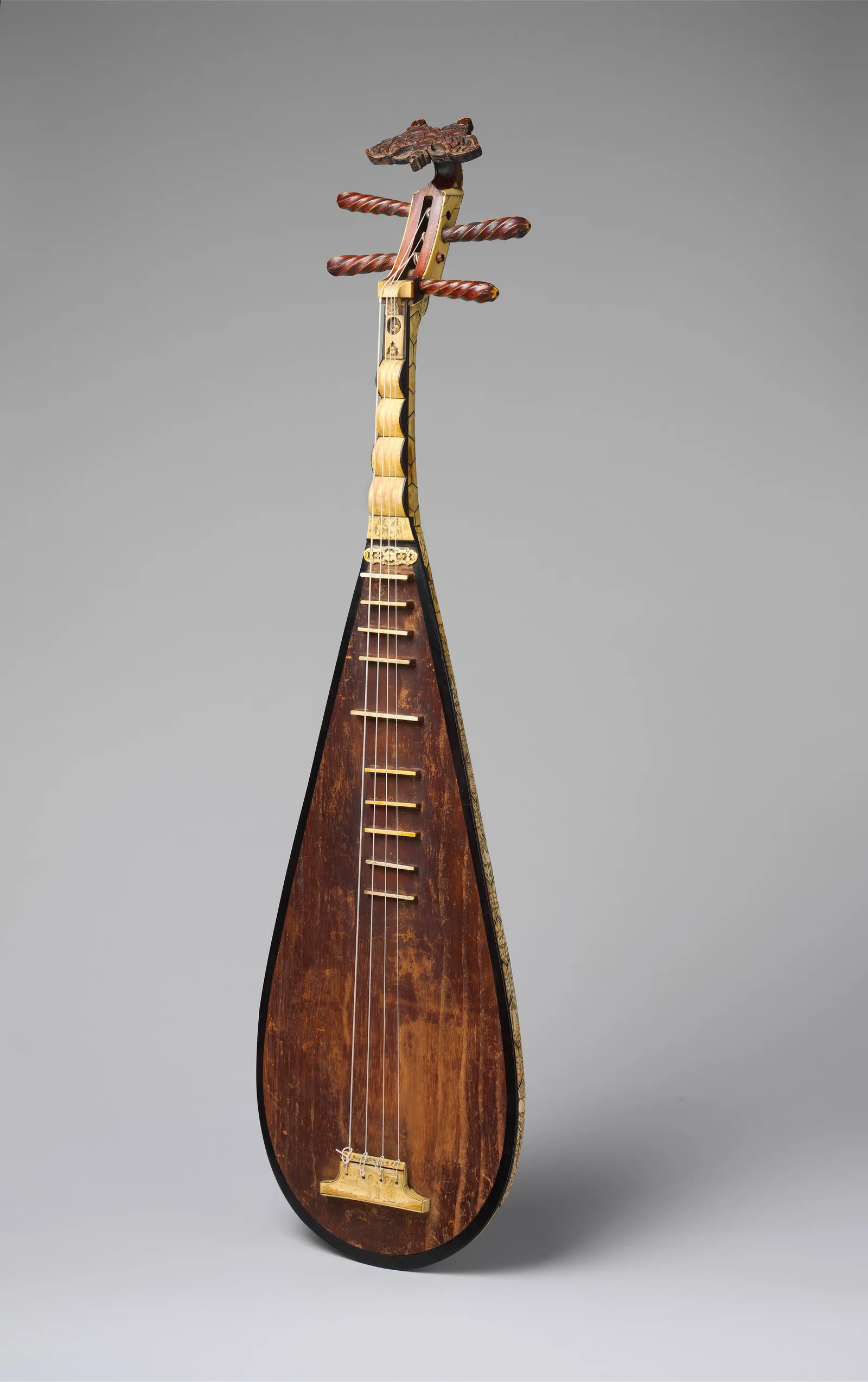
instrument
Pipa
琵琶
A pear-shaped Chinese lute, plucked and fretted, heard in opera and storytelling ensembles and in a virtuosic solo repertory.
- Type
- instrument
- Also known as
- p'i-p'a, 琵琶
- Updated
- 2026-10-13
- plucked
- lute
- fretted
Documented characteristics
- Instrument family
- Lute
- How sound is produced
- Plucked
- Strings
- Twisted silk strings; originally plucked with a large triangular plectrum
- Structure
- A pear-shaped body with a fretted neck
- Playing method
- Plucked; from the late Tang dynasty onward increasingly with the fingernails rather than a plectrum
- Typical context
- Opera, storytelling ensembles, and a solo repertory of programmatic, virtuosic music
Fields with no verified source are omitted rather than filled in. See the sources below.
Sources for this entry
The Metropolitan Museum of Art · museum
Supports:
- The pipa's origin as a pear-shaped lute that migrated from Central Asia into China during the Han and Sui dynasties
- The name derives from the forward and backward plectrum strokes p'i and p'a
- Changes in playing: horizontal hold and a triangular plectrum until the mid-10th century, later a more upright hold and the fingernails
- Contexts: opera, storytelling ensembles, and a solo repertory of programmatic, virtuosic music
- Museum classification: chordophone, plucked fretted lute