The erhu belongs to the huqin family of two-stringed fiddles, which were introduced into China by nomadic Mongols during the Yuan dynasty; the element hu in the name marks it as a foreign import. The bow hair passes between the two strings, and the instrument is played vertically on the knee, fingered with the left hand and bowed with the right. It is heard in traditional ensembles, modern orchestras and solo performance, and in opera.
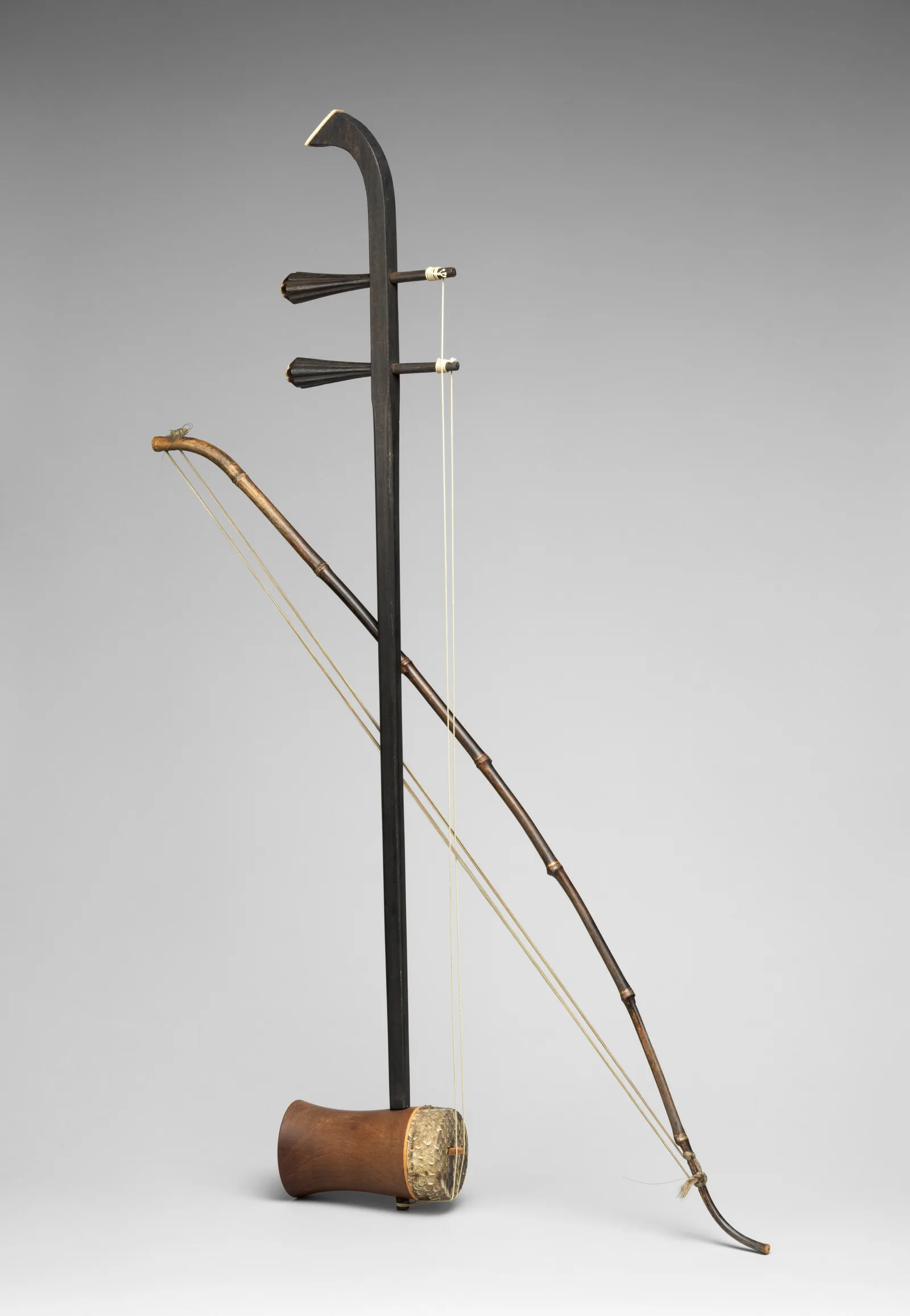
instrument
Erhu
二胡
A two-stringed Chinese bowed fiddle, held vertically and played with the bow hair passing between the strings.
- Type
- instrument
- Also known as
- nanhu, 二胡
- Updated
- 2026-10-13
- bowed
- fiddle
- two strings
Documented characteristics
- Instrument family
- Bowed fiddle
- How sound is produced
- Bowed
- Strings
- Two strings, with the bow hair passing between them
- Structure
- A round or hexagonal sound box with a snakeskin belly
- Playing method
- Held vertically on the knee, fingered with the left hand and bowed with the right
- Typical context
- Traditional ensembles, modern orchestras, solo performance, and opera
Fields with no verified source are omitted rather than filled in. See the sources below.
Sources for this entry
The Metropolitan Museum of Art · museum
Supports:
- The huqin (fiddle) family's introduction into China by nomadic Mongols during the Yuan dynasty
- The bow hair passing between the strings, and playing held vertically on the knee
- Typical construction: a round or hexagonal sound box with a snakeskin belly
- Contexts: traditional ensembles, modern orchestras, solo performance, and opera
- Museum classification: chordophone, bowed unfretted lute